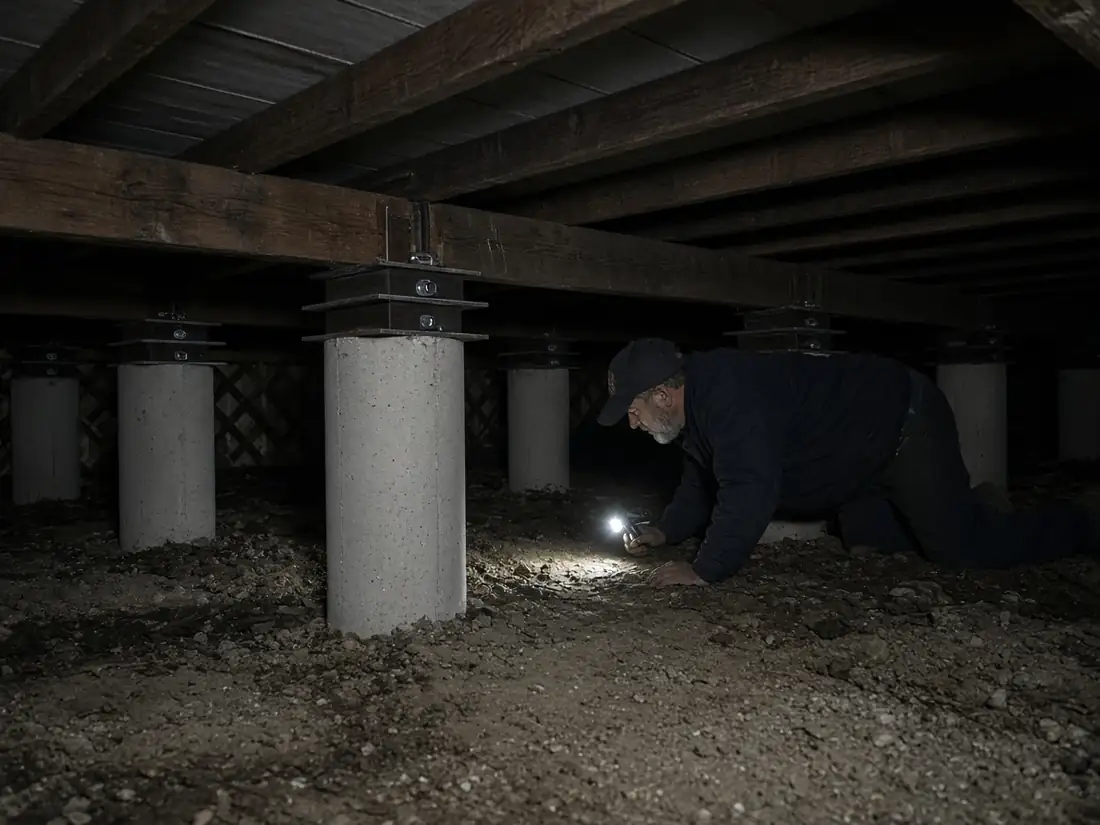
Leveling starts with an explanation
House leveling describes a result, not one standard method. A slab house may need underpinning, while a raised floor may need beam repairs, joist work or support adjustments. Before discussing how far to lift, ask what moved and how the inspector reached that conclusion. Elevation readings should be interpreted alongside construction history and visible damage.
An older house may have long-standing slopes that do not represent active failure. Ask whether the proposed work aims to stabilize movement, improve floor alignment or both. Put those goals in writing so the final inspection has something concrete to compare.
A controlled lift has limits
Raising one part of a house changes stress elsewhere. Brick, plaster, tile, plumbing and roofing connections can respond differently. A pro should explain the intended lifting sequence, monitoring and stopping criteria. Promising to close every crack or make every door perfect ignores how buildings behave.
Discuss fragile finishes and previous additions before work begins. Walk through the house together and photograph existing damage. Ask what happens if lifting reveals weak framing or begins to distress another area. The contract should explain who approves a revised plan and any added cost.
Plan for life around the work
Ask whether occupants can remain, which rooms need to be cleared and how crawlspace or interior access will be protected. Pets, stored items and vehicles may need moving. Confirm how plumbing tests, utility precautions and cleanup fit the schedule. Never crawl under temporary supports to check progress yourself.
Broad 2026 planning estimates might be $1,500–$4,000 for limited raised-floor adjustment, $3,000–$15,000 or more for broader pier and beam work, and $4,000–$15,000 or more for slab stabilization. These are estimates, not quotes. Rot, deeper support or interior access can move the total beyond those ranges.
Keep the cause from being ignored
Lubbock clay changes volume with moisture. A leaking line, repeated ponding or uneven watering can keep changing the ground after the floor is adjusted. Ask which drainage or plumbing measures belong in the repair plan and which need another trade. A lift without a cause assessment can leave the same complaint returning.
Keep pre-work and post-work elevation records, the support layout and maintenance instructions. We connect homeowners with independent local pros at no charge; we do not lift houses. Choose the provider who explains the limits and documents the work you are actually buying.