Walk the house with a simple checklist
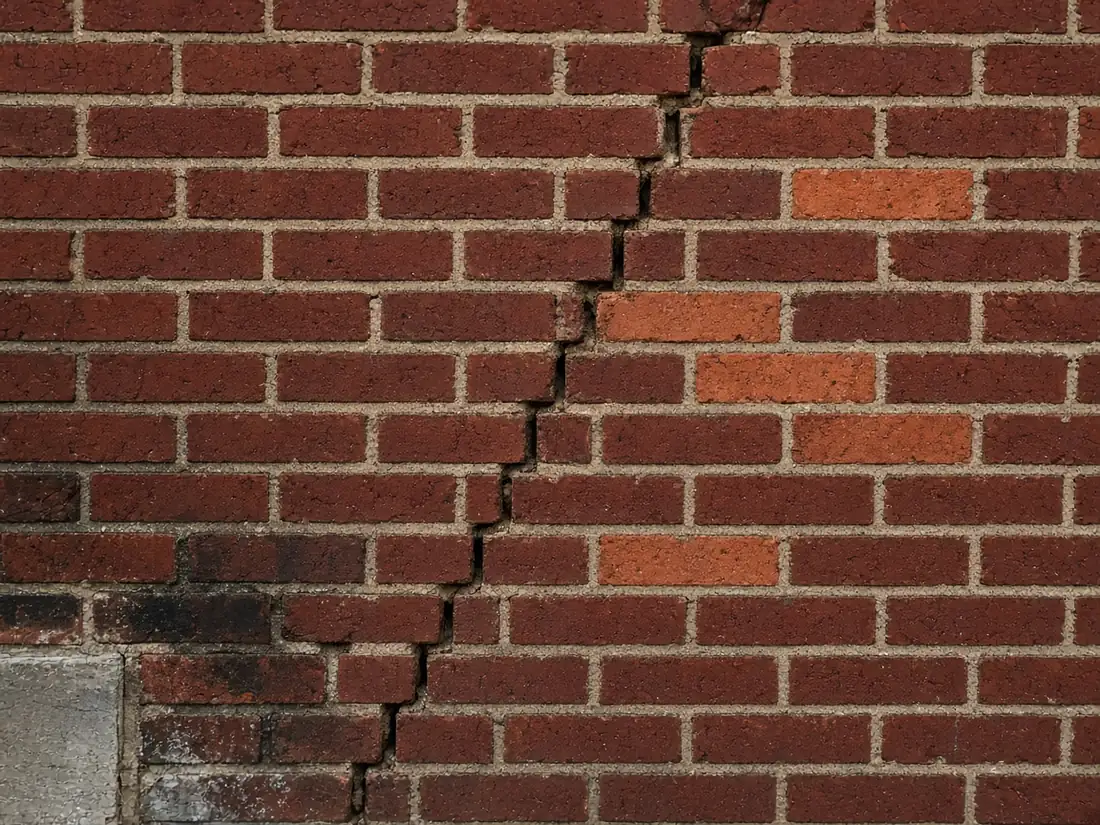
Start outside, then compare what you see indoors. Look for stair-step mortar cracks, gaps around windows, separation at additions and soil pulling away from slab edges. Indoors, note diagonal wall cracks, sloping floors and doors that began rubbing recently. Several symptoms concentrated in one area give an inspector more useful information than a single close-up photograph.
Write down which doors stick and whether the frame or door itself appears distorted. Check for swollen wood, loose hinges and ordinary finish damage too. Those problems can resemble foundation symptoms and may have a much simpler cause.
Watch change, not just crack width
Take dated photos with a ruler beside the crack and repeat from the same angle. Sketch the location on a floor plan. Note when symptoms appeared and whether recent weather, plumbing work or landscaping changed water around the house. A record spanning dry and wet conditions can help reveal a pattern.
Do not use an internet crack-width rule as a structural clearance. Displacement, location and speed of change matter as well. A small crack that is growing may deserve more attention than a wider old repair that has stayed stable for years.
Read the yard along with the walls
Lubbock clay shrinks in drought and swells when water returns. Check downspouts, irrigation leaks and low ground holding runoff next to the house. Flat terrain can leave water with no easy outlet. A green strip beside a dry lawn may justify checking for a leak, but color alone cannot identify one.
Caliche depth varies, even between nearby properties. Do not assume the neighboring home proves your footing conditions. Avoid aggressive watering or digging beside the foundation as a quick experiment. Ask for a measured moisture and drainage plan that suits the specific property.
Know what warrants prompt help
Fresh movement combined with a visibly leaning wall, a sagging occupied floor or rapidly changing gaps calls for prompt professional assessment. Keep people away from visibly unstable areas. If damage affects gas or electrical equipment, contact the appropriate utility or emergency service rather than trying to adjust it yourself.
For slower changes, arrange an inspection and bring your photos, leak history and previous repair papers. Ask what evidence supports monitoring, maintenance or structural repair. We are a free referral service connecting you with independent local pros; we do not diagnose buildings or perform the work.